
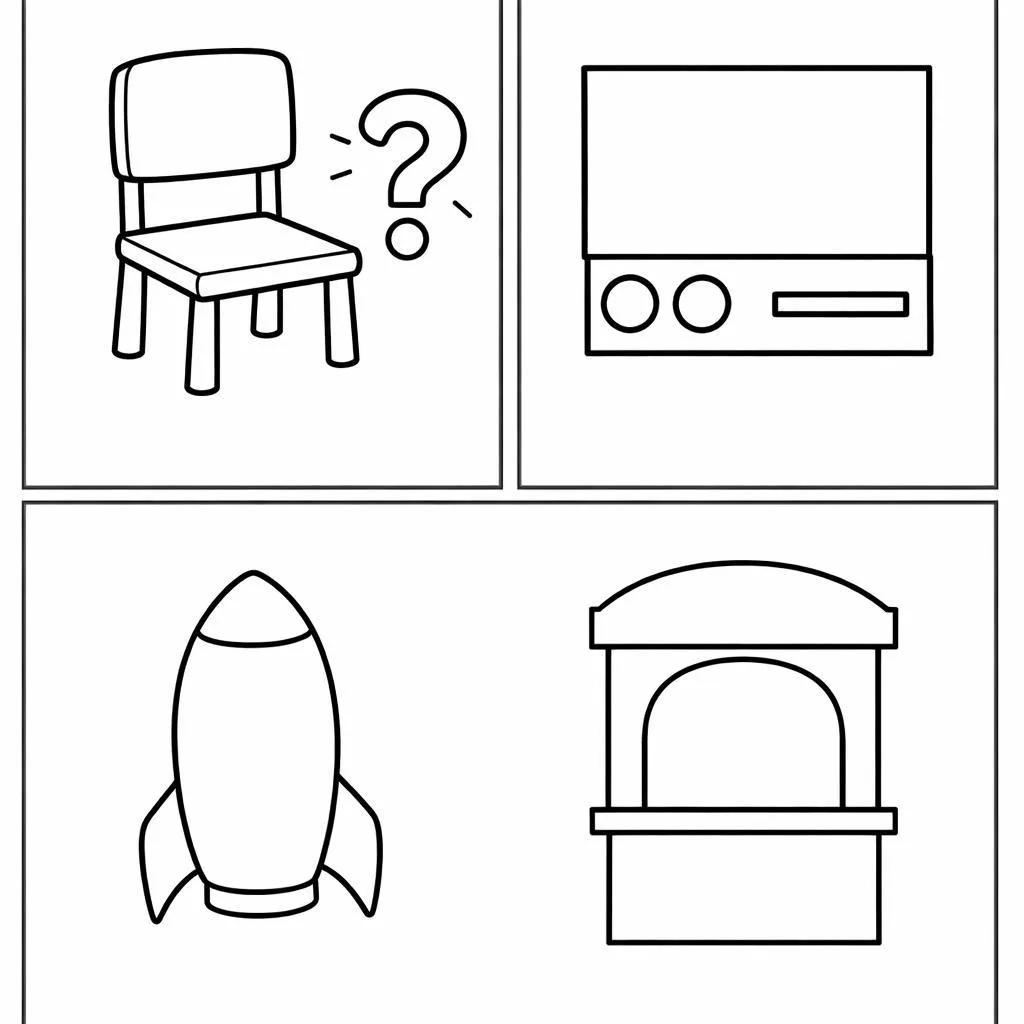

A 15-minute pretend-play activity for ages 3–5. Children imagine new jobs for an ordinary chair, describe their ideas, and build a shared story through words, gestures or supported choices.


Prepare the pretend-play space (2 minutes). Invite 4–6 children to gather where they can comfortably see the chair. Keep walking routes clear. Explain that the display chair stays on the floor: nobody climbs on, moves or stands on it. Children may participate from their own seats, mobility equipment or another comfortable position.
Introduce the chair's wish (2 minutes). Speak as the chair: 'I spend so much time being a chair. Today I would like a pretend job!' Ask, 'What could this chair become in our imagination?' Allow thinking time. Accept watching as participation.
Explore a first idea (3 minutes). Follow a child's suggestion, such as turning the chair into a pretend radio. Ask, 'What might our radio say?' Invite children to speak, make a quiet sound, sign or gesture from their places. If nobody offers an idea, model one briefly, then invite a different possibility. Nothing needs to be attached to or moved on the chair.
Offer different ways in (3 minutes). For children new to pretend play, offer two concrete choices: 'Could it be a radio or a ticket desk?' Say each choice while showing a simple gesture, and accept a look, point or other established choice signal. For children ready for more, ask, 'Who might visit it, and what would they need?' Choose support by readiness rather than age alone.
Make a tiny shared story (3 minutes). Invite the group to choose one job to explore together. Narrate three short moments: the chair begins its new job, a visitor arrives, and something happens. Ask one question at a time: 'Who arrives?' or 'What happens next?' Echo each contribution without requiring full sentences. Children can contribute with a partner, ask the adult to express their idea or pass. If ideas conflict, save one for a second pretend day rather than forcing agreement.
Return the chair and reflect (2 minutes). Say, 'Our chair is a chair again, but we can remember its pretend job.' Ask children to share or show one favorite moment. Briefly note whether children offered an idea, responded to a peer or linked two story events. Use observations to choose future play invitations, not to rank children.


A 15-minute pretend-play activity for ages 3–5. Children invent welcoming invitations for imaginary guests, choosing words, gestures and playful changes that help everyone join.

A 15-minute pretend weather studio for ages 3–5. Children invent forecasts for imaginary characters, explore feeling words and choose caring responses through speech, pointing or gentle gestures.

A 15-minute pretend-play activity for ages 3–5. Children imagine different uses for one blanket, help an imaginary character solve a problem, and build a short shared story through words, gestures or choices.

A 15-minute pretend-play activity for ages 3–5. Children invent helpful imaginary machines, explain what they do, and work together to improve a shared invention using words, gestures or drawings.