
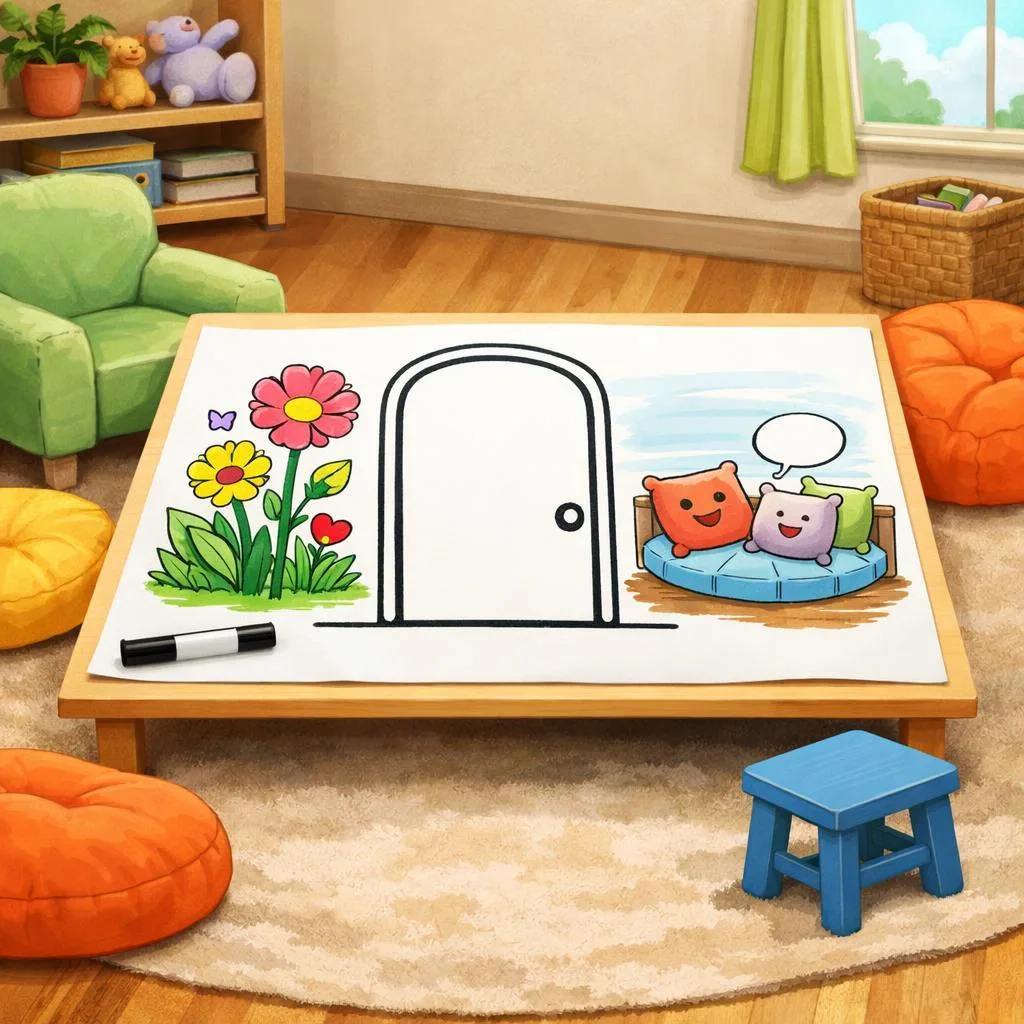

A 15-minute pretend-play activity for ages 3–5. Children invent what lies behind a drawn doorway and build a shared story through words, sounds, pointing or gestures.


Prepare the doorway (2 minutes). Gather 4–6 children where everyone can see the paper. Draw a large doorway and explain that it is a pretend doorway, not something to climb through. Invite children to sit, stand comfortably or watch before joining. Tell them they may contribute or pass.
Choose what is beyond it (2 minutes). Ask, 'Where might this door open today?' Pause to give children time to respond. If an open question feels too broad, offer two possibilities, such as a garden of enormous flowers or a room where pillows talk. Accept words, sounds, pointing and gestures. Draw simple, large pictures of the ideas and help the group choose one together.
Welcome a character (3 minutes). Ask, 'Who might visit this place?' Sketch a character suggested by the children. Invite them to choose a name, a greeting or a way the character feels. Model a short opening: 'Our visitor opened the door and saw...' Let children finish with an idea, gesture or sound, and describe their contribution aloud without requiring them to repeat it.
Give the visitor a playful problem (3 minutes). Invite a gentle story problem, such as a talking pillow that has forgotten its bedtime song. Ask, 'What could our visitor try?' Wait before offering suggestions. Draw one or two proposed solutions, then narrate what happens when the character tries a child-chosen idea. Keep the story reassuring and allow more than one possible solution.
Choose a storytelling challenge (3 minutes). For children beginning to join pretend stories, offer a choice between two drawn actions and tell one short event together. For children ready for more, invite two connected events using 'first' and 'then,' or ask how another character could help. Choose the level by interest and readiness rather than age alone. Children may direct the educator, tell with a partner or simply listen.
Close the door gently (2 minutes). Retell the group's story in three short parts: where the visitor went, what happened and how it ended. Point to the drawings as you speak. Invite children to suggest a final goodbye or quiet gesture. Afterward, note which forms of participation and prompts supported engagement, and use those observations to plan another playful story.
Adapt for access and comfort. Keep drawings bold, uncluttered and within easy viewing range; describe each drawing aloud. Offer spoken choices without requiring children to see or point. Accept eye gaze, familiar communication tools, signs and home-language contributions. Keep sounds optional and avoid sudden voices. An adult or partner can make every mark and gesture on a child's behalf. Shorten the story if attention fades.


A 15-minute pretend-play activity for ages 3–5. Children invent welcoming invitations for imaginary guests, choosing words, gestures and playful changes that help everyone join.

A 15-minute pretend weather studio for ages 3–5. Children invent forecasts for imaginary characters, explore feeling words and choose caring responses through speech, pointing or gentle gestures.

A 15-minute pretend-play activity for ages 3–5. Children imagine different uses for one blanket, help an imaginary character solve a problem, and build a short shared story through words, gestures or choices.

A 15-minute pretend-play activity for ages 3–5. Children invent helpful imaginary machines, explain what they do, and work together to improve a shared invention using words, gestures or drawings.